
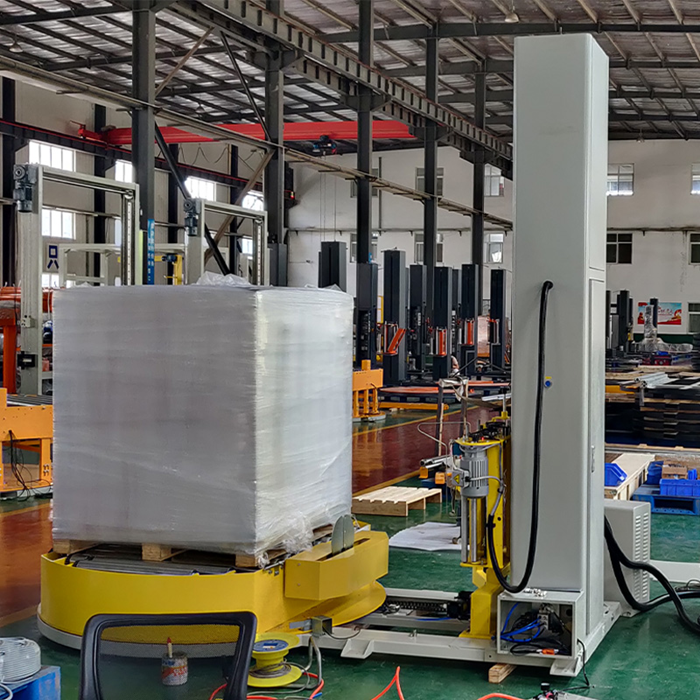
A pallet wrapping machine is packaging equipment designed to quickly and evenly secure loads onto a pallet using stretch film. It enhances pallet stability during handling and storage, protects products from dust and moisture, and reduces the risk of damage or loss during transport.
Additionally, this solution helps standardize packaging and minimize film consumption through consistent tension and repeatable wrapping cycles.
In practice, wrapping machines are used in warehouses, logistics centers, and manufacturing facilities where processing speed and consistent packaging quality are essential. They are employed to palletize boxes, bags, construction materials, and other individual or grouped products, with models ranging from compact units to fully integrated conveyor-line systems. Equipment selection is based on load weight and dimensions, required throughput, and service availability—including options such as Chinese equipment.
The Role of Pallet Wrappers in Warehousing
A warehouse pallet wrapper is designed to quickly and evenly secure loads onto a pallet using stretch film, ensuring stability during storage and handling. Machine wrapping reduces the risk of boxes, bags, or other containers tipping over or shifting when handled by forklifts or stacked.
Another key function is the standardization of the packaging process: uniform film tension and a preset number of wraps ensure consistent, reliable load securing for every pallet. This helps reduce packaging material waste, cut shipment preparation time, and improve the accuracy of warehouse operations during order picking.
Key objectives in warehouse logistics
- Load stabilization: preventing spillage, shifting, and damage during internal transport and loading/unloading operations.
- Packaging protection: minimizing exposure of outer packaging and labeling to dust, moisture, and accidental contamination.
- Expediting shipments: reducing pallet wrapping time and reliance on manual labor.
- Enhancing safety: lowering the risk of falling loads and associated injuries or incidents.
Role of the pallet wrapper in manufacturing
In a manufacturing environment, the pallet wrapper serves as the final stage in preparing products for internal transfer and shipment: finished goods, raw materials, or semi-finished products are secured to the pallet to withstand transport stresses. Machine wrapping ensures consistent results—a critical factor given steady production volumes and strict packaging quality standards.
The pallet wrapper also facilitates a continuous packaging flow at the end of the production line; it minimizes bottlenecks during pallet formation, reduces the impact of the human factor, and simplifies film consumption monitoring. If necessary, the wrapping process can be supplemented with reinforced layers at the base and top of the pallet to increase structural rigidity and prevent deformation.
- Preparation for transport: secure stabilization of products for delivery to the finished goods warehouse or the customer.
- Preservation of product appearance: careful wrapping reduces the risk of scuffing, tears in the outer packaging, and label damage.
- Cost optimization: controlled tension and preset wrapping programs minimize stretch film waste.
- Process control: makes it easier to maintain consistent packaging standards and identify quality deviations.